

Garage Door Opener Repair & Installation
GARAGE DOOR OPENER REPAIR & INSTALLATION IN Valparaiso, IN.
You press the button and nothing useful happens. Maybe a hum, maybe a click, maybe a door that lifts a foot and gives up. Spring Changers LLC repairs and installs residential garage door openers throughout Valparaiso, IN, and tells you honestly which of the two your unit actually needs.
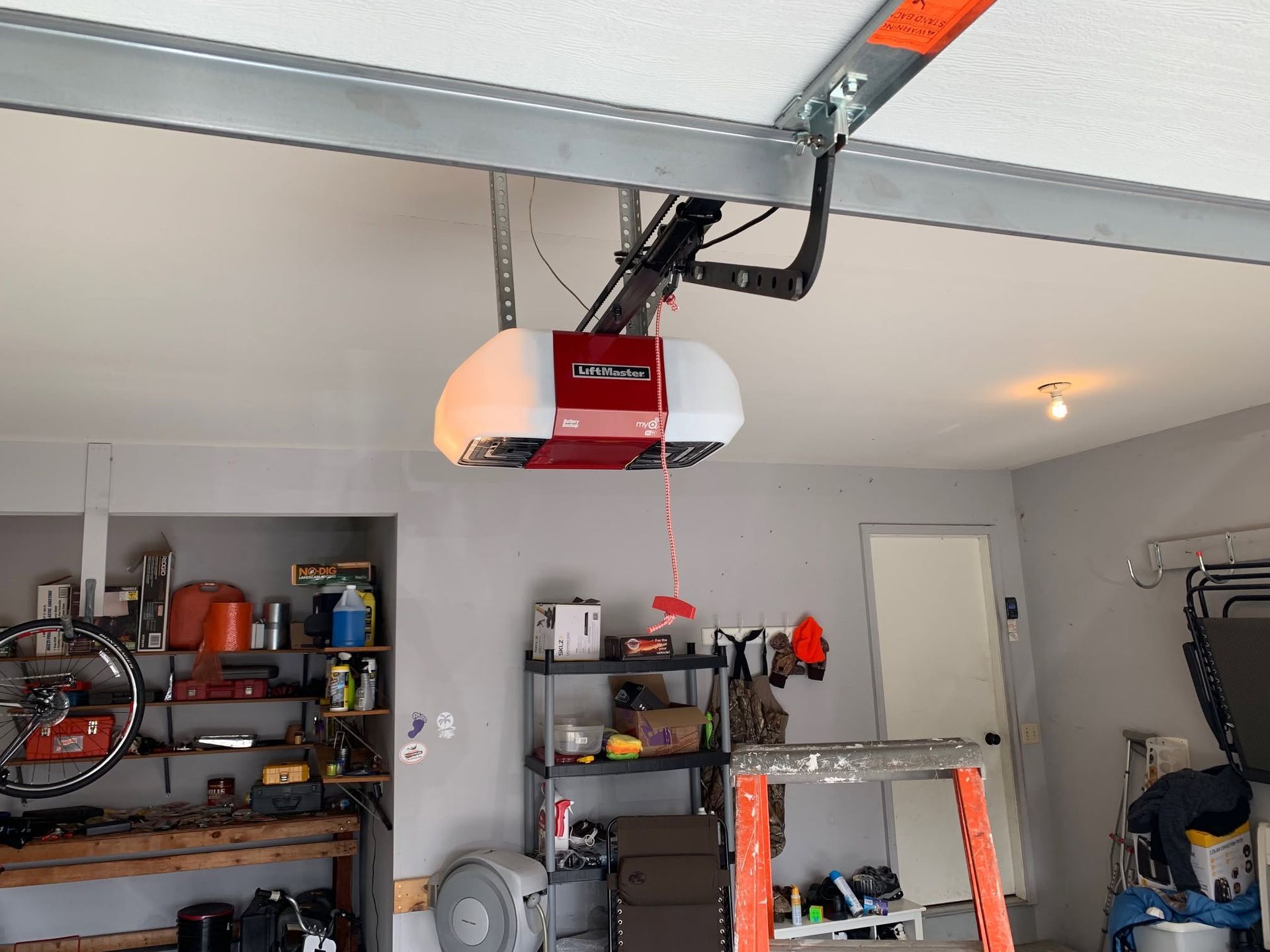
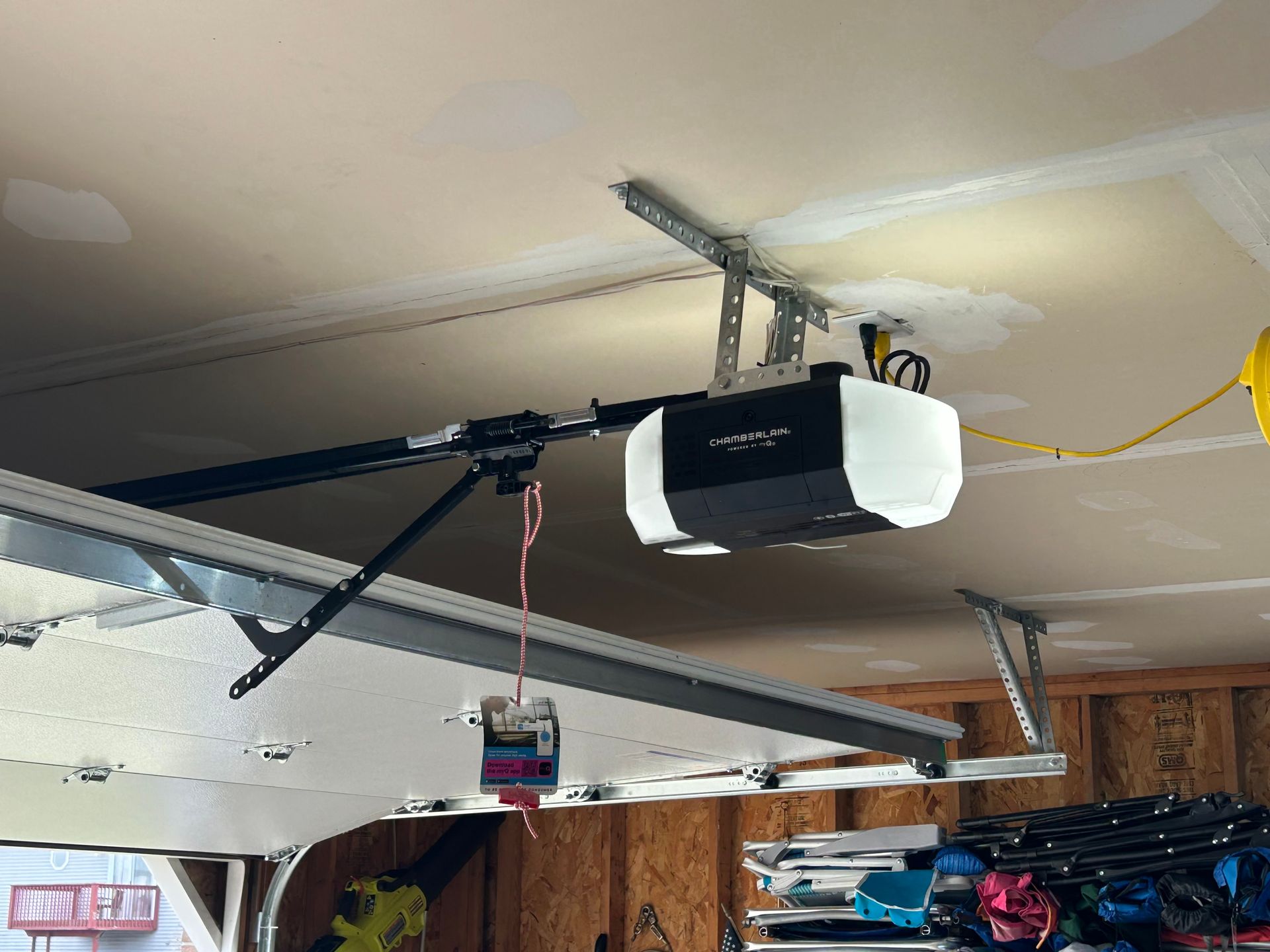
AN OPENER RARELY DIES WITHOUT WARNING.
Motors give notice. The unit gets louder, the door starts hesitating at the same point, the remote works from 10 feet but not 20, and the light flashes a code nobody has looked up. Those are all diagnosable faults with different price tags attached.
Sorting a repairable board or a stripped gear from a genuinely finished motor is the whole job. Guessing wrong costs a homeowner either an unnecessary replacement or a repair that fails again by spring.
- Fault diagnosed before any part is quoted
- Repair recommended whenever it genuinely makes sense
- Belt, chain, and smart drive units installed
- Safety sensors aligned and reversal force tested
GARAGE DOOR OPENER REPAIR & INSTALLATION
THE QUIETEST UPGRADE YOU CAN MAKE TO A HOUSE.
Anyone with a bedroom over the garage knows the sound of a 20-year-old chain drive at 6 a.m. Modern belt-driven units run quietly enough that the room above sleeps through them, and they bring soft-start travel, rolling-code security, battery backup, and phone control along for the ride. For Valparaiso homeowners who use the garage as a main door, that difference is felt several times a day.
OPENERS SUITED TO HOW YOU ACTUALLY LIVE.
The right unit depends on your door, not on the box price. Heavy insulated doors and oversized double doors need more horsepower than a builder-grade single. Detached garages benefit from battery backup, since a power cut leaves no interior access. Attached garages with living space above almost always justify a belt drive. We match drive type, horsepower, and features to the door and the household, not to whatever is stacked highest at the warehouse.
REPAIR WHEN POSSIBLE, REPLACE WHEN NECESSARY.
There is real money in telling every homeowner their opener is finished. Doing the opposite for 20 years is why our neighbors keep calling. A worn gear kit, a failed capacitor, a corroded sensor wire, and a misprogrammed limit switch are all repairs. When a unit truly has reached the end, because parts are discontinued or the security is outdated, you will hear that clearly. Which is your opener doing right now?
WHAT THE RIGHT OPENER GIVES YOU
Mornings Nobody Sleeps Through
A belt drive replaces the metallic clatter of a chain with a low hum. For anyone in a bedroom above or beside the garage, that single change is usually the most noticeable improvement of the entire visit.
Entry You Can Count On
The door opens the first time, from the distance you expect, whether the remote is in the car or the app is on your phone. Reliable entry sounds unremarkable until you have lived without it.
Genuinely Better Security
Rolling-code technology generates a new code with every use, closing the door on the code-grabbing vulnerability that older fixed-code units carry. Anything installed before 1993 is worth replacing on that basis alone.
Access When the Power Fails
Battery backup keeps the door working through an outage, which matters most for detached garages with no interior entry. Storms in this part of Indiana make that feature far more practical than it first sounds.
Fewer Calls Down the Road
A correctly sized motor on a properly balanced door works well within its limits. That margin is the difference between an opener that lasts 15 years and one that fails inside of 6.
Safety That Gets Verified
Photo eyes and reversing force protect anyone walking under the door. Having both tested rather than assumed turns a legal requirement into something you can actually rely on.
WHAT WE HANDLE
OUR GARAGE DOOR OPENER WORK
Six areas cover the full range of residential opener work, from the small electrical faults that mimic total failure to a complete replacement with a modern drive unit.
MOTOR WORK
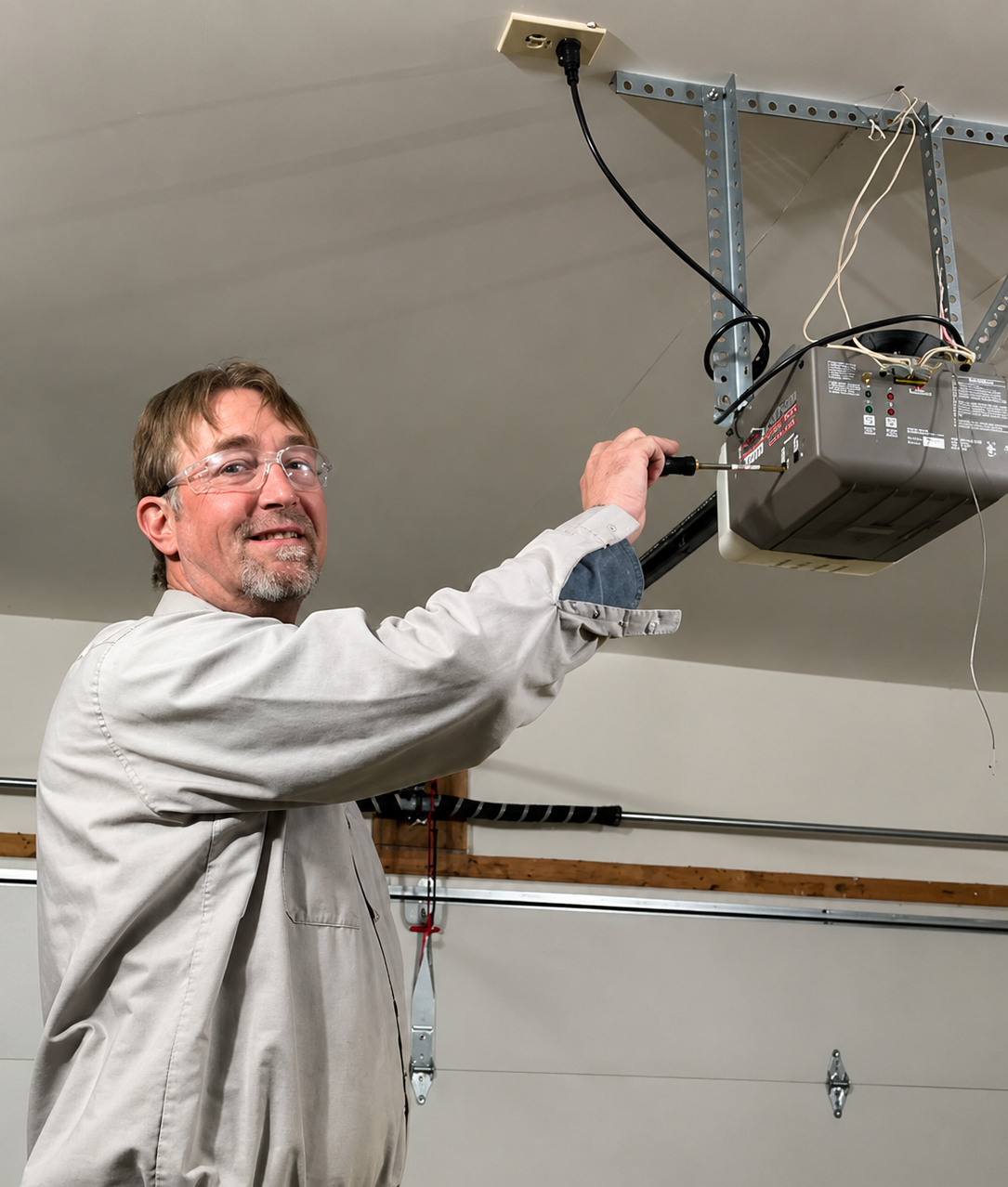
Motor and Gear Repair
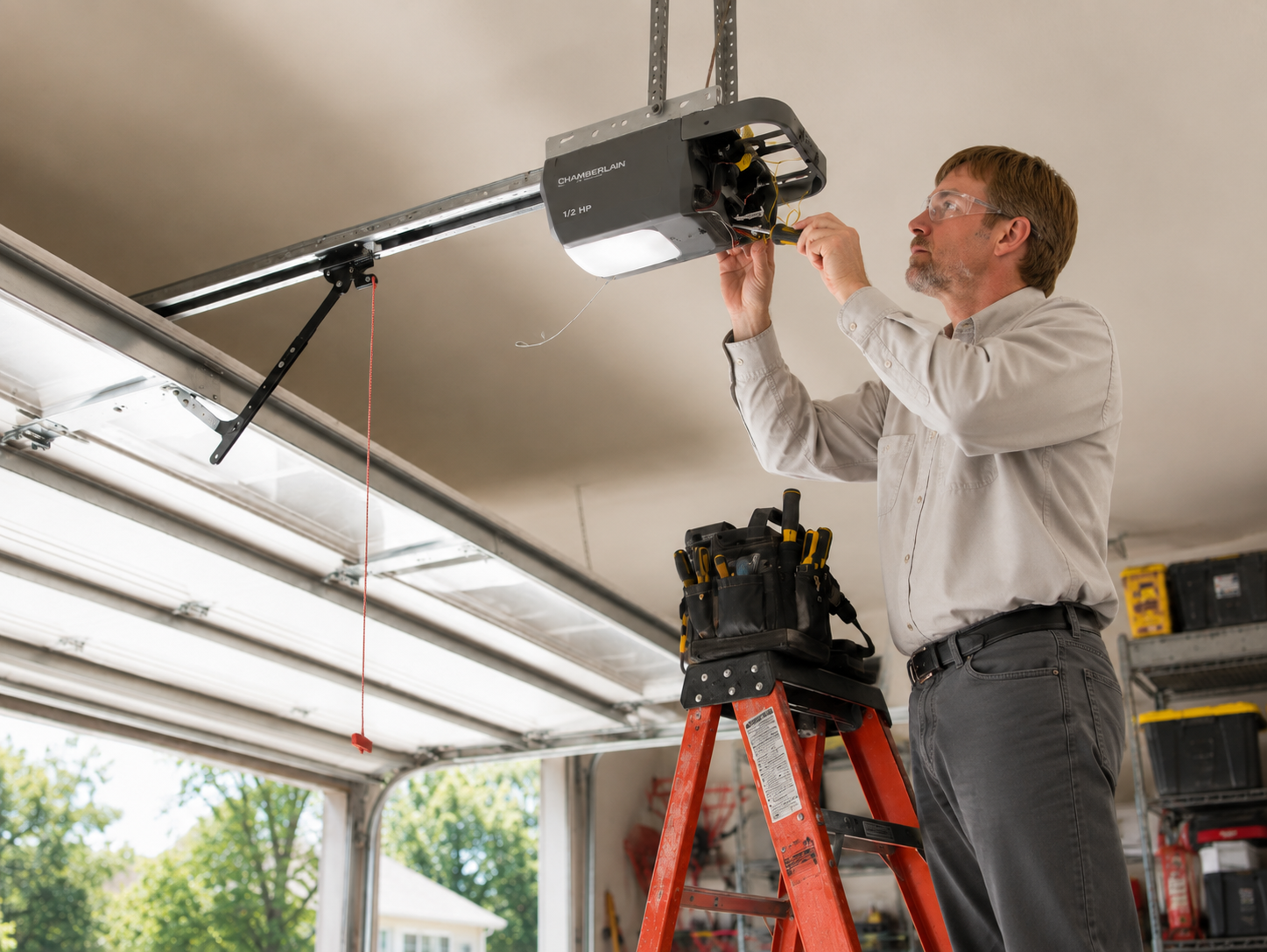
A humming unit that will not move usually means a stripped nylon gear or a failed capacitor rather than a dead motor. We open the head, identify the failed component, and rebuild with the correct manufacturer kit where parts remain available.
SENSORS
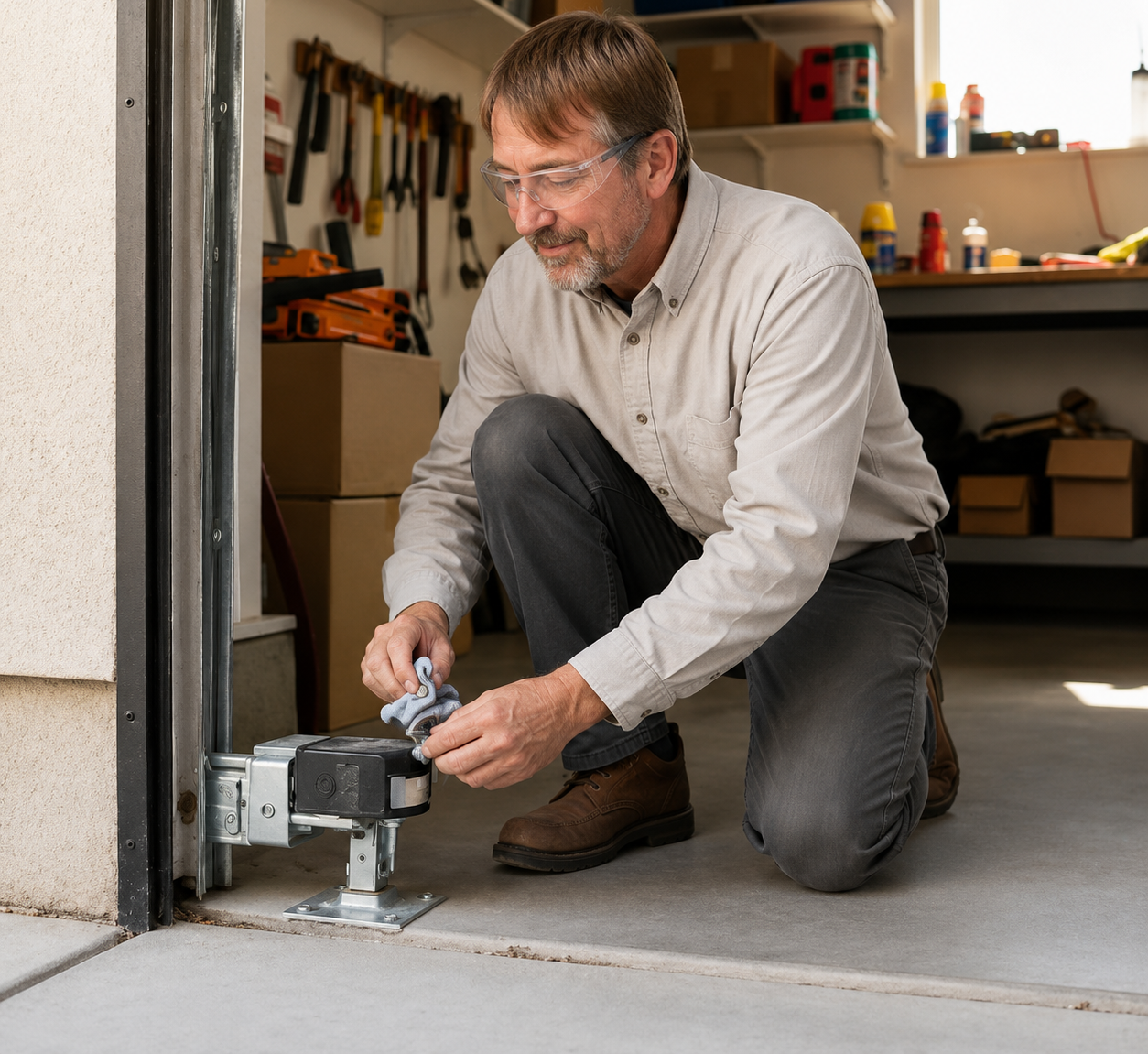
Safety Sensor Alignment
Photo eyes that blink, sag on loose brackets, or lose their wiring stop a door from closing entirely. We remount the sensors square, repair damaged runs, clean the lenses, and confirm the beam holds across the full opening.
REMOTES
Remote and Keypad Programming
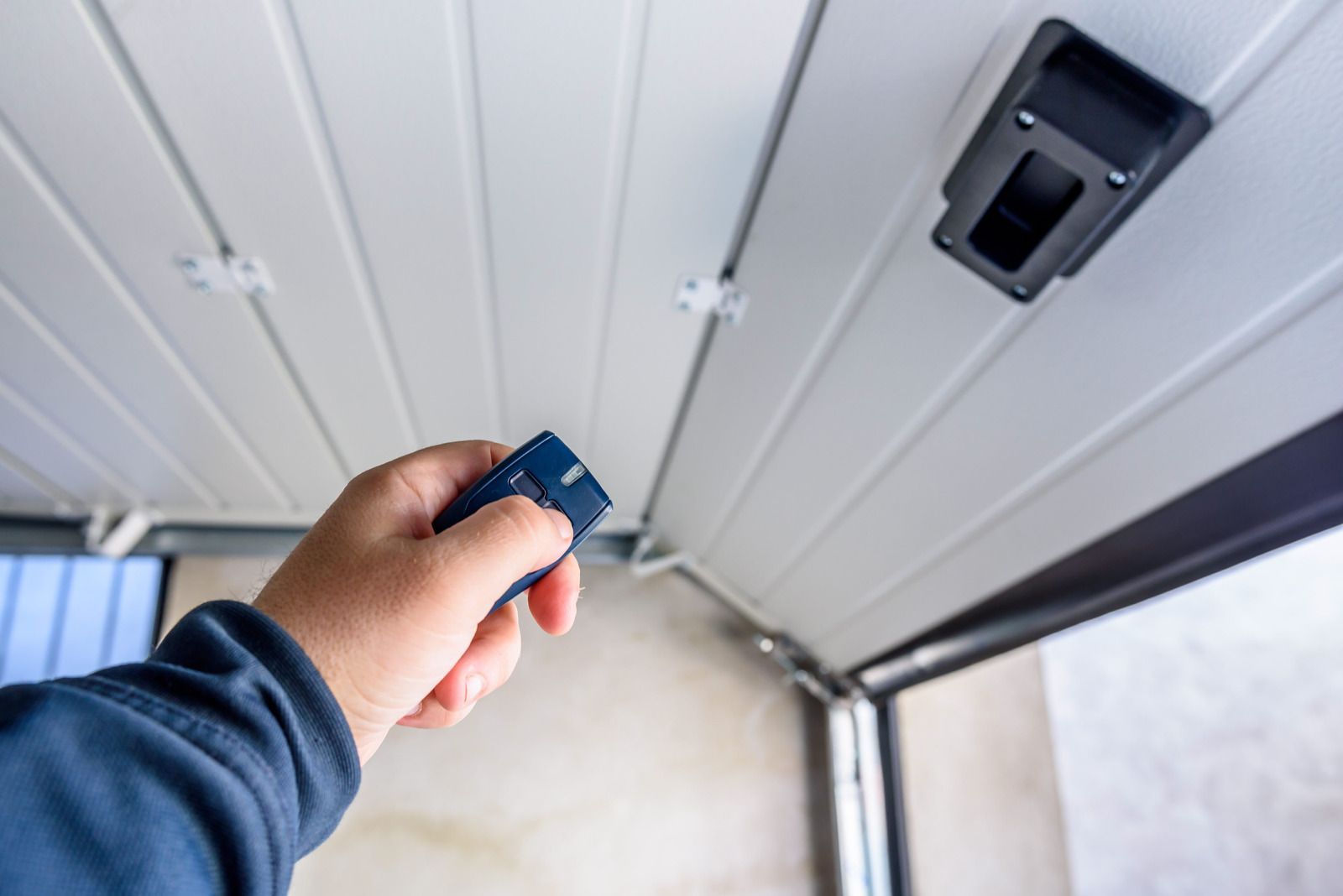
Lost remotes, dead keypads, and units that forgot their pairing after a power event are quick fixes. We program new transmitters, reset outdoor keypads, and clear old codes so a previous owner's remote no longer opens your garage.
BELT DRIVE
Belt Drive Installation
Belt-driven openers move the trolley on a reinforced rubber belt instead of a chain, which cuts noise and vibration dramatically. They suit attached garages and any home with living space directly above the door.
CHAIN DRIVE
Chain Drive Installation
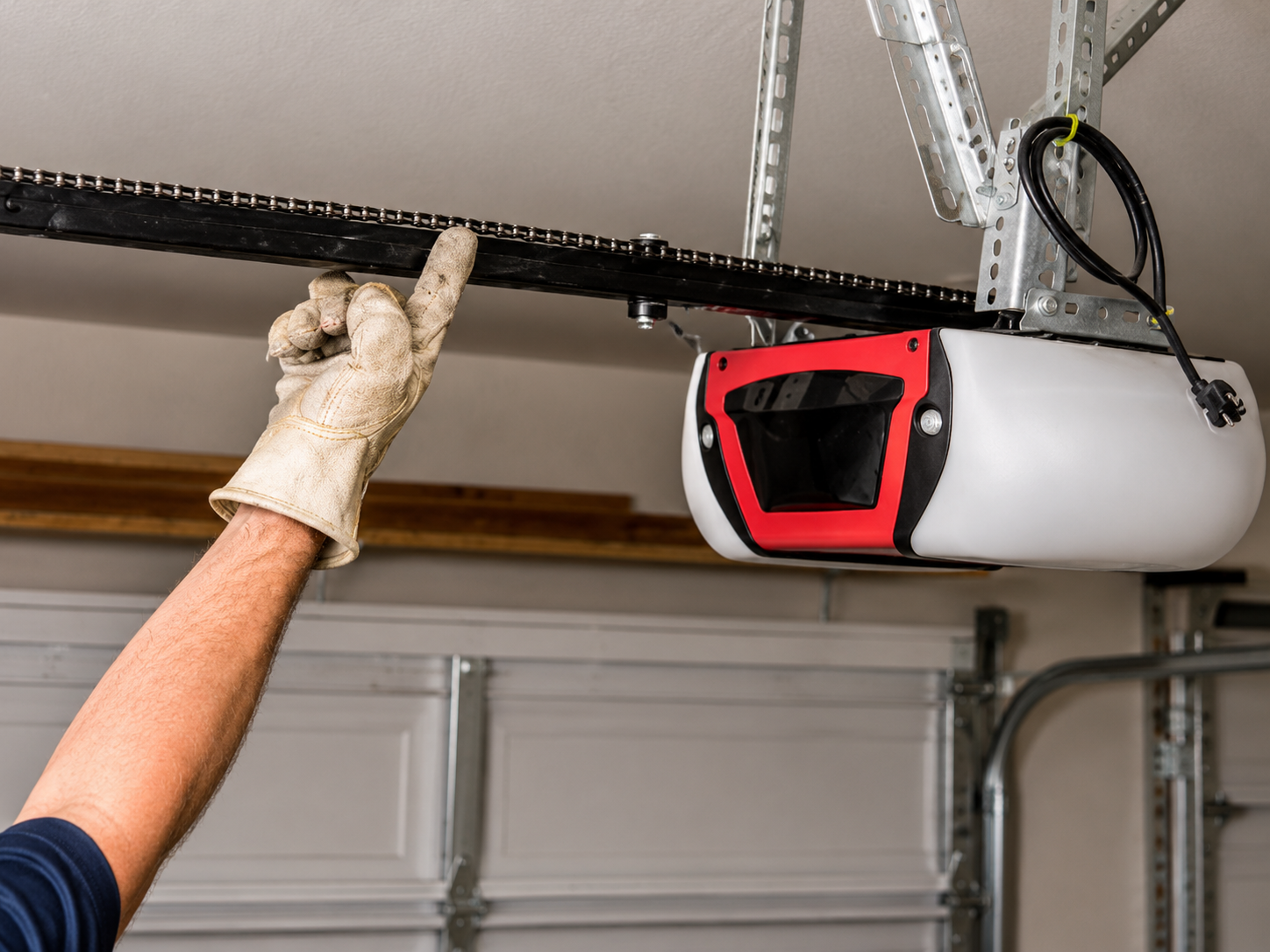
Chain drives remain the workhorse choice, offering strong lifting power at a lower cost with a long service record behind them. For detached garages where noise carries nowhere, they are frequently the more sensible investment.
SMART SETUP
Smart Opener Setup
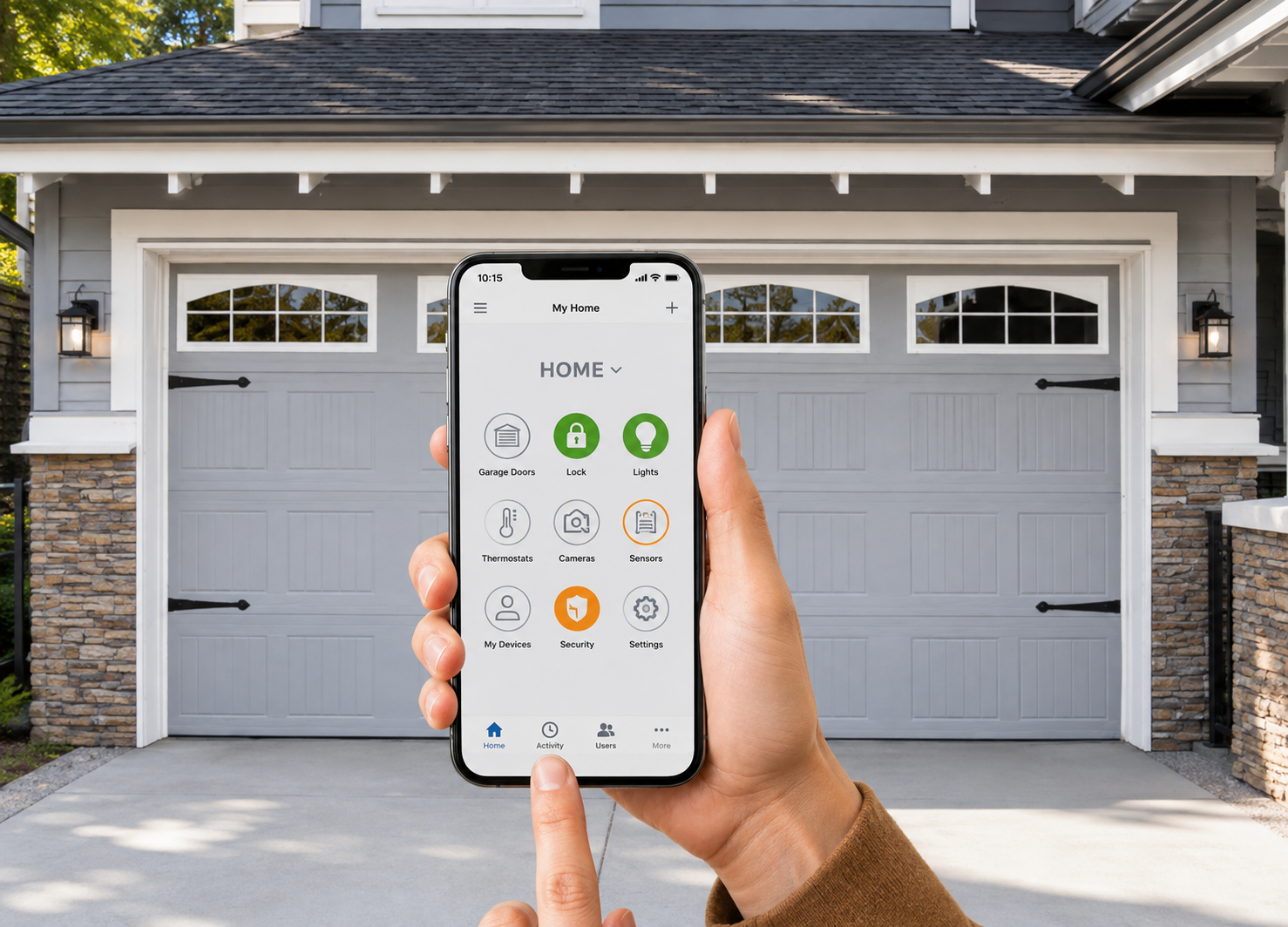
Wi-Fi enabled units let you check the door's status, close it remotely, and receive alerts when it has been left open. We connect the unit, configure the app, and walk you through the settings before leaving.
THE WORD ON OUR WORK
WHAT OUR CLIENTS SAY.
The comment we hear most after an opener job is about the quiet. The second most common one is surprise that we repaired a unit two other companies had already written off as finished, and that the repair held through the winter that followed.
Common Questions
frequently asked
questions.
Openers generate more confusion than any other part of a garage door system, so here are the questions homeowners bring us most often, answered without the jargon.
Should I choose a belt drive or a chain drive opener?
Belt drives run far quieter and suit attached garages or bedrooms above the door. Chain drives cost less and handle heavy doors well, making them a sound choice for detached garages where noise is not an issue.
How long should a garage door opener last?
Most residential units run 10 to 15 years with reasonable care. Spring Changers LLC finds in Valparaiso, IN that lifespan hinges on daily cycles and on whether the door itself stays properly balanced.
Is it worth repairing my opener or should I replace it?
Repair usually wins for units under roughly a decade old with an available part. Replacement makes sense once gears, boards, and security are outdated, and Spring Changers LLC says which applies across Valparaiso, IN.
Why does my wall button work when the remote does not?
That points to the remote rather than the opener. A dead battery, lost programming after a power surge, or interference from nearby LED lighting will all disable a transmitter while the hard-wired button keeps working.
What are the photo eyes near the floor for?
They form an invisible beam across the opening and reverse the door instantly if anything breaks it. Federal safety rules have required them on residential openers since 1993, and a misaligned pair stops the door closing.
Do I really need battery backup on an opener?
It depends on your access. Detached garages with no other entry benefit enormously, since an outage otherwise locks you out. Attached garages with interior access treat it as convenience rather than necessity.
Can I keep my existing opener with a new door?
Often yes, provided the unit is reasonably modern, correctly sized for the new door's weight, and still passes its safety tests. Heavier insulated doors sometimes need more horsepower than the original motor delivers.
Why does my opener hum without moving the door?
A hum with no movement means the motor is powered but the drive is not engaging. A stripped gear, a failed capacitor, or a door too heavy from a broken spring all produce that exact symptom.
HOW WE WORK
FROM DEAD BUTTON TO WORKING DOOR, HERE IS HOW.
STEP 01
WE DIAGNOSE
Before touching the motor we check the door itself. An unbalanced door mimics opener failure convincingly, and replacing a healthy unit does nothing except move the problem forward a few months.
STEP 02
WE ADVISE
You get told plainly whether repair or replacement is the better value, with the reasoning attached. Part availability, unit age, and the condition of the drive all factor into that recommendation.
STEP 03
WE SIZE
If replacement is the answer, horsepower and drive type are matched to your door's weight, height, and daily usage rather than to a shelf price. Noise tolerance and backup needs get discussed too.
STEP 04
WE INSTALL
The rail is mounted square, the header bracket is anchored into solid framing, and the trolley is set so the door travels without binding. Old units and packaging leave with us.
STEP 05
WE PROGRAM
Travel limits and force settings are dialed in for your specific door. Remotes, keypads, and any smart features are configured and handed over working, not left as homework for you.
STEP 06
WE TEST
Photo eyes get obstructed deliberately, the door meets a solid object to prove the reversal, and the full cycle is run repeatedly. Nothing is signed off on assumption alone.